
For Employers · Powered by Skodel

Finding great people is only
half the job.

29% of employees leave within 90 days of starting. Every early departure costs your business $23,000–$60,000 and erases every benefit of a great hire. GoHeadHunt stays with you — and with your new starters — through the critical first weeks. Regular wellbeing check-ins. Early warning when something's wrong. Retention support that most recruitment partners have never offered.

Regular wellbeing check-ins on your new starters
Early risk detection before people resign
Legally compliant psychosocial risk assessments
Powered by Skodel — Australia's leading wellbeing platform
A care worker and manager in a genuine workplace check-in conversation
The old way is broken

Early departure is the most expensive problem in hiring. And the most preventable.

Employee turnover costs Australian businesses $3.8 billion every year — most of it in the first 12 months. 42% of that turnover is preventable. It just needs someone paying attention.

29%
Quit within 90 days of starting
Nearly 1 in 3 new starters leave before the 90-day mark. The probation period is the highest-risk window of any employment relationship.
Nectar HR Research
42%
Of all turnover is preventable
Nearly half of departures could have been avoided. Most people who leave give early warning signs — but only if someone is watching for them.
Paycor HR Research 2025
$40K
Average replacement cost per mid-level role
$23,000–$40,000 for a mid-level replacement in Australia. Senior or specialist roles can exceed $60,000 — before you factor in lost productivity.
Edwards HR · Australian Data
48%
Cite burnout as their reason for leaving
Almost half of Australian workers who left cited feeling mentally or emotionally burnt out. Particularly acute for workers aged 18–34 — the care sector's core workforce.
AHRI Turnover Data 2025
The critical window

The first 90 days decide everything.

Most departures are not sudden. They start quietly — a sense of isolation, unclear expectations, feeling unsupported. By the time someone hands in their notice, you've already lost them. The warning signs appeared weeks earlier.

⚠️
Days 1–14
Highest vulnerability
New starters are forming their first impressions. Feelings of overwhelm, isolation, or misalignment begin here and rarely improve without intervention.
Highest risk
👁
Days 14–45
Decision window
Research shows up to 20% of turnover happens within 45 days. This is when dissatisfaction either resolves or solidifies into a resignation decision.
Watch closely
📈
Days 45-90
Stabilisation or exit
New starters who reach 90 days with positive sentiment are significantly more likely to stay through 12 months. Intervention here still works.
Still critical
Day 90+
Retained & productive
Employees who clear 90 days in good health and with positive connections have a dramatically higher chance of long-term retention.
Target state
Why people leave early

Early departures rarely come without warning.

The signs are there. They just need someone to notice — and act on them before a resignation lands on your desk.
😔
Poor culture fit & feeling isolated
86% of costly departures trace back to poor cultural fit. New starters who don't feel connected to their team within the first weeks rarely stay.
⚠ SHRM: 86% of bad hires = culture mismatch
🔥
Burnout & role overwhelm
48% of Australian workers who left cited burnout. Workers aged 18–34 are nearly twice as likely to leave due to emotional exhaustion — exactly the care sector's talent pipeline.
📋
Unclear expectations & poor support
Psychosocial hazards like unclear job expectations, high demands, and low support are the leading drivers of early departure — and early intervention stops them from escalating.
🔇
Nobody asked how they were going
The simplest driver of retention is also the most neglected: checking in. Employees who feel seen and heard in their first 90 days are significantly more likely to stay through 12 months.
How Post-Placement Support works

Regular check-ins.
Early warning. Intervention before it's too late.

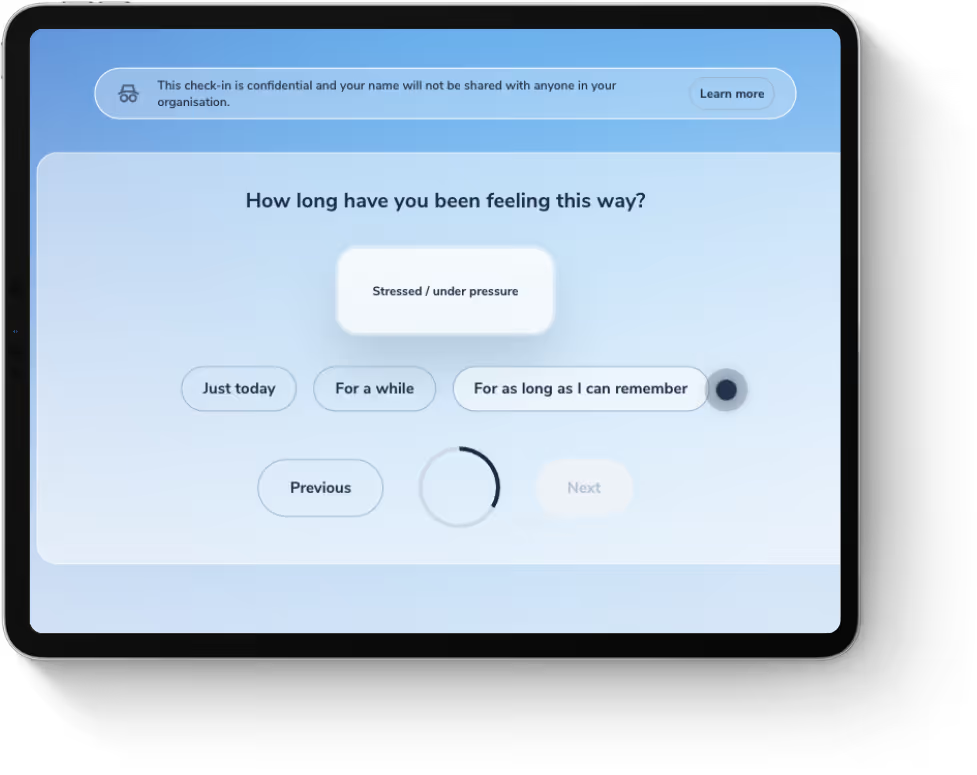
GoHeadHunt runs structured wellbeing check-ins on your placed candidates through the critical first 90 days. One-minute surveys. Real data. Early alerts when something needs attention.

1

Structured check-ins at key milestones

Week 1, Week 3, Week 6, and Week 12 check-ins on every placed candidate. One-minute surveys measuring support, workload, team connection, and role clarity — the four leading indicators of early departure.

2

Psychosocial risk scoring in real time

Survey responses automatically score psychosocial risk against Safe Work Australia's recognised hazard categories. You see the picture clearly — no interpretation required, no spreadsheets to maintain.

3

Early alerts before they become resignations

When a candidate's wellbeing score falls below threshold, GoHeadHunt is notified immediately. We reach out — to the candidate and to you — to discuss what's happening and agree on appropriate action.

4

Employer reporting & prevention plans

You receive regular reports on your placed cohort's wellbeing. Risk assessments are documented and compliant with WHS laws. If patterns emerge, prevention plans are produced — with specific controls to address the identified hazards.

Talk to Us About Rentention
Powered bySkodel

Built on Australia's leading psychosocial risk platform.

Goheadhunt post-Placement Support runs on a  platform used by leading Australian organisations to manage psychosocial safety.
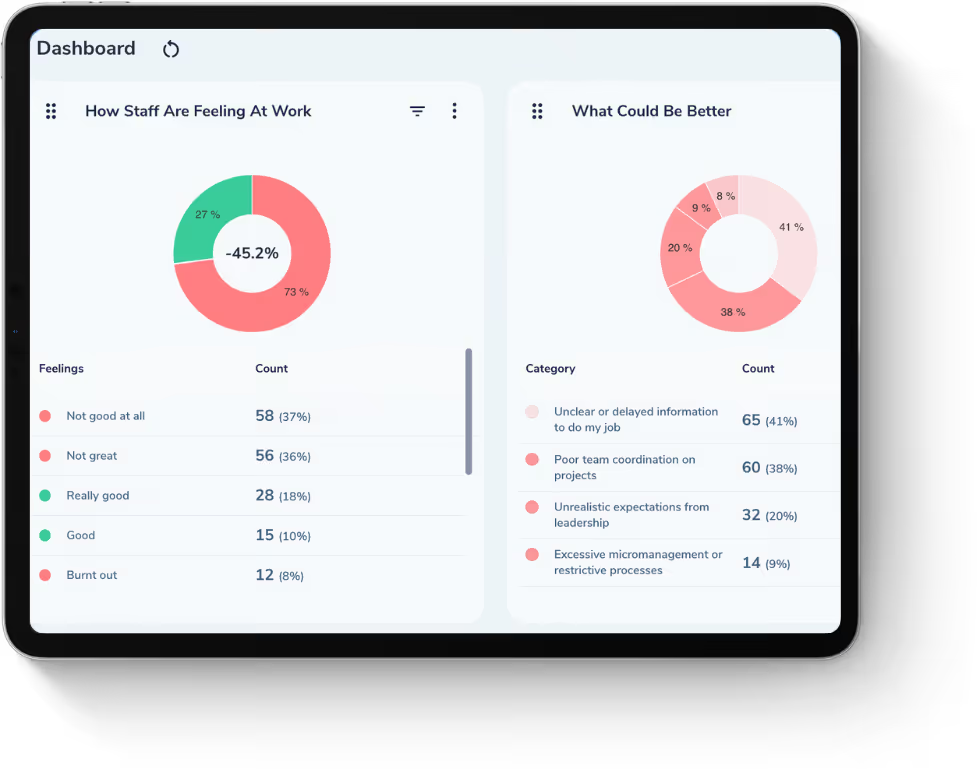
Legally compliant psychosocial risk assessments
Aligned with Safe Work Australia's Model Code of Practice and Comcare's Code of Practice. Regulator-ready, always.
One-minute worker surveys — zero disruption
Skodel's check-ins take under a minute. High completion rates because they don't feel like a chore. Anonymous options available for honest responses.
Every Auto-scored risk assessment — no manual workin one place
Survey data automatically populates a psychosocial risk assessment with scores next to each hazard category. Clear, visual, and defensible.
Prevention plans with suggested controls
For each identified risk, Skodel generates prevention plans with specific controls — ready to implement and share with your team in one click.
Board-ready reporting at any time
Clear visualisations of your psychosocial risk position. Backed by Skodel's collaboration with Workplace Employment Lawyers and Organisational Psychologists.
Who benefits most

Post-Placement
Support is most
valuable where early departure hurts most.

🏥

Nursing & Allied Health

Care sector burnout is acute. New nurses are especially vulnerable in their first weeks — high patient loads, complex environments, and the emotional weight of care work. Checking in early saves careers and shifts.
👶

Childcare & Early Education

A sector with chronic workforce shortages. Losing a trained educator in their first 90 days takes months to recover from. Understanding how they're settling in — and intervening early — changes the outcome.
🤲

Aged Care & NDIS

High-demand roles with significant emotional labour. Support workers who don't feel supported themselves leave quickly. Regular check-ins signal that their wellbeing matters — which changes retention rates.
🍽️

Hospitality & Retail

The highest proportion of businesses in these sectors experience 20%+ annual turnover. The first 90 days set the trajectory. Early intervention in these environments has a disproportionate impact on annual turnover figures.
💼

Professional Services

A bad hire in a client-facing professional role costs more than salary — it costs relationships. Post-placement check-ins help identify culture misalignment early, when it can still be addressed.
🌿

NFP & Community Services

Mission-driven workers burn out too — sometimes faster, because they care so much. NFPs with limited HR resources benefit most from a structured, external support system that monitors their new starters.
A different kind of recruitment partner

Most recruiters stop at
the placement.
We don't.

Traditional recruiter

Places the candidate.
Then moves on.

💰
Fee collected on placement day
Incentive to place quickly. No incentive to ensure they stay.
📵
Zero post-placement contact
Once the candidate starts, the recruitment relationship ends. You're on your own if things go wrong in week three.
🔄
Early departure = another fee
Some agencies benefit from repeat placements. High early turnover is a revenue stream, not a failure.
🚫
No wellbeing visibility
You learn a candidate is struggling when they resign. By then it's too late.
GoHeadHunt Post-Placement Support

Places the candidate.
Then helps them stay.

🤝
Partnership aligned to your retention outcome
We succeed when your hire succeeds. Post-placement support keeps us invested in the outcome — not just the placement.
📅
Structured check-ins through the first 90 days
Week 1, 3, 6, and 12. Regular contact with your new starters. Wellbeing data in your dashboard continuously.
Early intervention — before resignation
Risk alerts when wellbeing drops. Conversations happen in week three, not after the resignation in week eight.
📋
Legally compliant psychosocial risk documentation
Every check-in contributes to a live psychosocial risk assessment. You're meeting your WHS obligations — automatically.
Placement · Retention · Wellbeing

The hire doesn't end on
their first day.

Talk to us about adding Post-Placement Support to your GoHeadHunt partnership. Protect the investment you made finding great people — and give them the best chance of staying.

Powered by Skodel
WHS compliant
Covers first 90 days
All care sector industries

🤖 AI Career Coach — built for care sector workers

Australia's first AI coaching platform for nursing, childcare & aged care.
Thank you! Your submission has been received!
Oops! Something went wrong while submitting the form.